What Is a Skid Steer? Definition, Uses & How It Works
Skid steer, skid loader, skidsteer — same machine, a few different names. Here's what it actually is, how it works, and everything it can do once you attach the right tool.
Intro
If you've heard the terms "skid steer," "skid loader," and "skidsteer" used interchangeably and wondered whether they're actually the same thing, they are. This guide breaks down exactly what a skid steer is, how it works, and the surprising range of jobs one machine can handle once you start swapping attachments.
What Is a Skid Steer? A Simple Definition
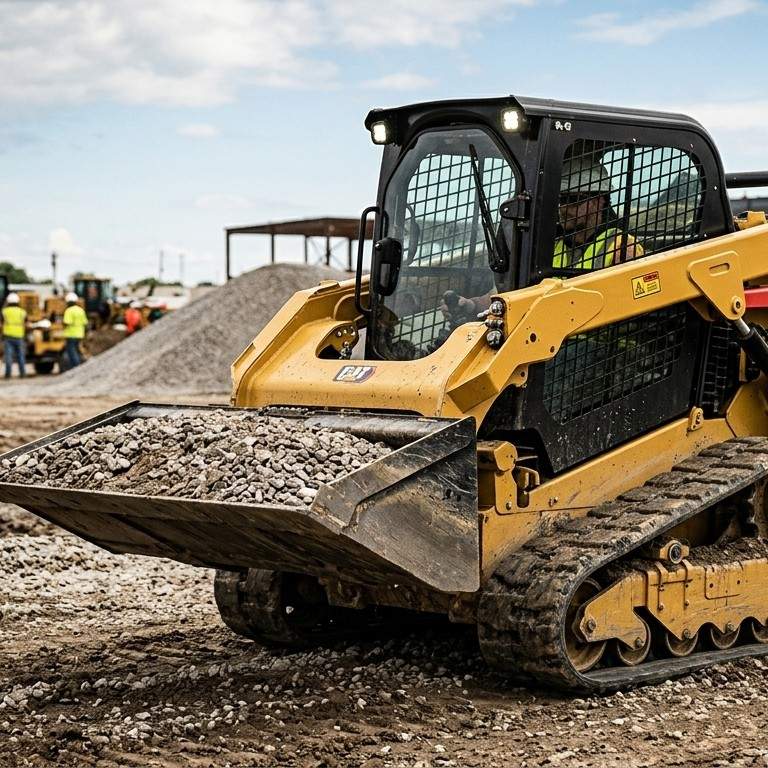
A skid steer is a small, engine-powered machine that sits on either four wheels or two tracks, with the wheels or tracks on each side able to run at independent speeds. That's where the name comes from: instead of steering with a turning axle like a car, the machine turns by "skidding" — running one side faster than the other, or even in opposite directions, to pivot in place. This gives skid steers an extremely tight turning radius, which is exactly why they're the go-to machine for tight job sites, narrow gates, and cramped urban lots where a larger machine simply can't maneuver.
Most skid steers also share a common front-end design: a set of lift arms and a universal attachment plate, which is what makes them so versatile. Swap the bucket for a different tool, and the same machine becomes something else entirely.
What Is a Skid Loader? Same Machine, Different Name
"Skid loader" and "skid steer" refer to the same piece of equipment. The full technical name is "skid-steer loader," and different manufacturers, regions, and generations of operators have shortened it differently — some say skid steer, some say skid loader, and you'll occasionally see it spelled as one word, "skidsteer." Bobcat, one of the earliest and most recognizable brands in this category, is so associated with the machine that some operators use "Bobcat" as a generic term for any skid steer, similar to how people say "Kleenex" for any tissue. Whichever term you use, you're talking about the same wheeled or tracked loader with independent side steering and a swappable attachment system.
How Does a Skid Steer Work?
The mechanics are simpler than most people expect:
- Independent drive on each side — hydraulic motors power the wheels or tracks on the left and right sides separately
- Skid steering — running one side faster than the other (or in reverse) pivots the machine, allowing it to turn within its own footprint
- Hydraulic lift arms — raise and lower whatever attachment is mounted on the front
- Auxiliary hydraulics — a second hydraulic circuit powers active attachments like augers, brush cutters, and mowers, not just the lift arms
Because the whole machine runs off one hydraulic system, an operator can control drive, lift, and attachment function all from the cab with no need to switch machines mid-job.
What Does a Skid Steer Do?
At its core, a skid steer moves material — digging, grading, lifting, and hauling. But describing it that way undersells it. A skid steer is really a platform: the base machine provides power, hydraulics, and mobility, and the attachment determines the actual job. That's why the same machine shows up on a landscaping crew's trailer, a demolition site, and a farm, doing three completely different jobs.
Skid Steer Loader Uses by Industry
Skid steers earn their keep across a wide range of industries:
- Construction — site grading, material handling, trenching, demolition
- Landscaping — grading, trenching for irrigation, brush clearing, tree and stump removal
- Agriculture — moving feed and bales, mucking stalls, clearing fence lines
- Snow removal — plowing, snow blowing, and pushing large volumes quickly in commercial lots
- Property maintenance — mowing, brush cutting, and general lot cleanup
What is a skid loader used for on any given day really comes down to what's attached to the front of it — which is the whole point of the machine.
What Can You Do With a Skid Steer? Attachments Change Everything
This is where a skid steer goes from "loader" to "toolkit." Common attachments include:
- Buckets — standard, grading, and multi-purpose buckets for digging and material handling
- Augers — for post holes, fence lines, and footings
- Forks — pallet forks for material handling on job sites
- Brush cutters and mowers — for clearing overgrown lots and fence lines
- Trenchers — for utility lines and irrigation
- Snow blowers and plow blades — for winter operations
- Grapples — for handling brush, debris, and demolition material
- Breakers — for light concrete and demolition work
Because the attachment plate and auxiliary hydraulics are standardized across most brands, one skid steer with a handful of attachments can replace several single-purpose machines — which is a big part of why they're a staple on job sites of every size.
Keeping a Skid Steer Running
A machine this versatile earns its keep by staying in service, not sitting in the shop. Hydraulic leaks, undercarriage wear, and electrical faults are the most common issues we see, and they tend to show up faster on machines running heavy attachment cycles all day. If you're running a skid steer near Batavia, IL and want to know what to watch for, our guide on common skid steer problems covers the warning signs, and our skid steer repair services page covers what we fix, from hydraulics to undercarriage to engine diagnostics.
FAQs: What Is a Skid Steer
Yes. "Skid steer" and "skid loader" are two common shorthand terms for the same machine — officially called a skid-steer loader. You'll also see it written as one word, "skidsteer." All three refer to the same wheeled or tracked machine with independent side steering.
A skid steer typically runs on four wheels, while a compact track loader (CTL) uses rubber tracks instead. They share the same basic design, lift arms, and attachment system — tracks just provide better flotation and traction on soft or uneven ground.
With the right attachment, a skid steer can grade, mow, trench, drill post holes, plow snow, move pallets, clear brush, and handle light demolition. The base machine stays the same; only the attachment changes.
Most manufacturers build to a universal skid steer attachment standard, so many attachments are cross-compatible across brands. Hydraulic flow and mounting plate size can still vary by machine class, so it's worth confirming compatibility before buying or renting an attachment for a specific model.
Keep Your Skid Steer Doing What It Does Best
Whatever job your skid steer is built for, it can't do it sitting in the shop. RamzRep diagnoses and repairs skid steer hydraulics, engines, electrical systems, and undercarriages right here in Batavia, IL. Certified techs, 100+ five-star reviews.