Trailer Inspections Near Me: What Batavia, IL Operators Need to Know
Whether it's an annual DOT inspection or a pre-trip safety check, here's what a trailer inspection covers, how often you need one, and where to get it done fast near Batavia, IL.
Intro
If you're hauling cargo, equipment, or livestock, your trailer isn't optional gear — it's part of your business. And if it's not inspected on schedule, it's also a liability risk, a compliance risk, and a breakdown waiting to happen. If you searched trailer inspections near me looking for a shop in the Batavia, IL area, here's what a proper inspection covers and why timing matters more than most operators think.
What Does a Trailer Inspection Cover?
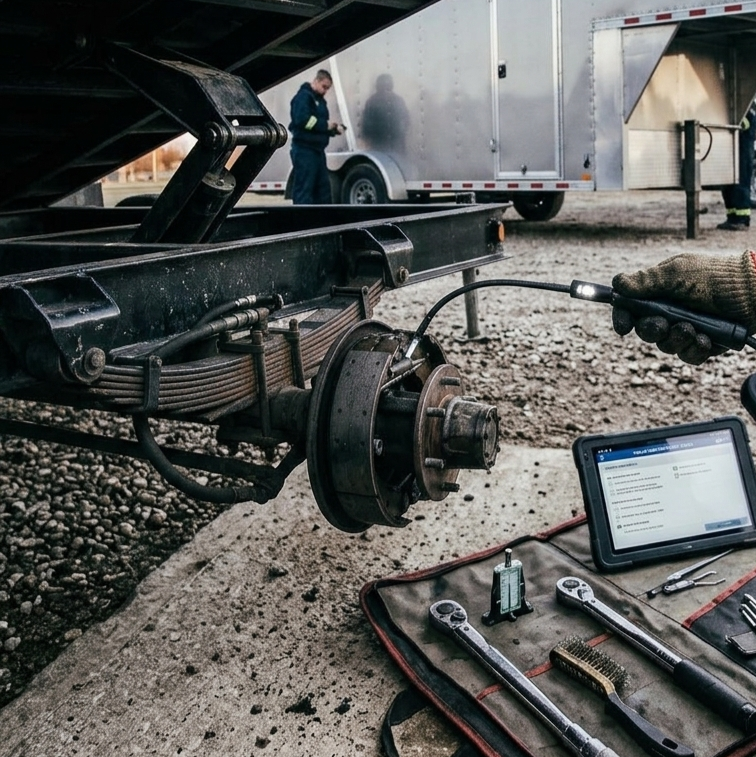
A thorough trailer inspection isn't a quick walk-around. At RamzRep, we check:
- Brakes — pad/shoe wear, air or hydraulic line condition, brake adjustment
- Axles & suspension — bearing play, spring condition, alignment
- Tires & wheels — tread depth, sidewall damage, lug torque, hub condition
- Lighting & electrical — brake lights, turn signals, running lights, wiring integrity
- Structural & frame — rust, cracks, weld integrity, cross-member condition
- Coupler & jack — wear, lubrication, safety chain and pin condition
- Doors & hardware — hinges, latches, seals
- Roof & water intrusion points — a leak you don't catch in an inspection becomes cargo damage later
Each of these maps to a full repair category if something's found — see our trailer repair services for the complete list, including brakes, axle & suspension, and wheels & hubs.
DOT Inspection vs. Annual Inspection vs. Pre-Trip Check
These terms get used interchangeably, but they're not the same thing:
- DOT inspection — a federally regulated inspection required for commercial trailers, covering specific safety-critical systems. Non-compliance can take your trailer out of service on the spot.
- Annual inspection — a yearly comprehensive check, often required by insurance or fleet policy even outside strict DOT requirements.
- Pre-trip inspection — a shorter check before a haul, focused on the items most likely to cause an on-road failure (tires, lights, brakes, coupler).
Batavia-area operators running commercial routes typically need all three on some cadence. If you're not sure which applies to your trailer, we'll walk you through it when you call.
All three fall under the broader umbrella of commercial trailer inspection — any inspection performed on a trailer used for business purposes, as opposed to a personal-use trailer. Whether a commercial trailer inspection needs to be a full DOT inspection, an annual check, or a quick pre-trip look depends on how the trailer is used, how often, and what triggered the inspection in the first place. If your trailer hauls freight, equipment, or livestock for your business, it's worth treating every inspection as a commercial trailer inspection rather than a casual once-over, even if it's not legally required to be DOT-regulated.
Trailer Brake Inspection: Why It Gets Extra Scrutiny
Of everything on an inspection checklist, brakes get the closest look — and for good reason. A trailer doesn't have its own engine braking or the safety margin a standalone vehicle has; it relies entirely on its own brake system to slow down safely, especially fully loaded. During a trailer brake inspection, we check:
- Pad or shoe thickness and wear pattern across all axles
- Brake drum or rotor condition, including scoring and heat damage
- Air line or hydraulic line integrity — no cracks, soft spots, or leaks
- Breakaway system function, for trailers required to carry one
- Brake adjustment and even application axle to axle
- Wiring and connector condition on electric brake systems
Uneven brake wear is one of the most common findings we run into, and it's rarely a sign the brakes themselves are bad. More often it points to a failing brake controller, a worn magnet on an electric brake system, or an axle alignment issue. Catching that during a trailer brake inspection is a fraction of the cost of the axle or full brake system replacement that follows if it's ignored long enough.
How Often Should a Trailer Be Inspected?
At minimum, once a year for DOT-regulated trailers. In practice, we recommend:
- Before any long haul — a quick pre-trip check
- Every 3–6 months for trailers in heavy daily use
- Immediately after any incident — a curb strike, hard stop, or overload event
- Seasonally — road salt and winter conditions accelerate frame and brake wear in Illinois
Skipping inspections doesn't save money — it just moves the cost from a scheduled maintenance visit to an unscheduled roadside failure. Our preventative maintenance program is built around catching issues before they become breakdowns.
Trailer Preventative Maintenance vs. a One-Time Inspection
An inspection is a snapshot — it tells you the condition of your trailer on the day you bring it in. Trailer preventative maintenance is the ongoing plan that keeps that snapshot from getting worse between inspections. The two work together rather than replace each other:
- An inspection catches what's already wearing, cracked, or out of spec right now
- A preventative maintenance plan addresses the root causes — greasing bearings on schedule, rotating and balancing tires, keeping brake components properly adjusted, and catching frame corrosion before it spreads
Fleets that treat inspection and preventative maintenance as separate, occasional line items tend to spend more over the life of a trailer than fleets that bundle them into one ongoing schedule. Our trailer preventative maintenance program is built to slot in right after an inspection, so whatever we find during the inspection gets addressed as part of a planned schedule instead of a one-off scramble the next time something breaks.
Pre-Trip Trailer Inspection Checklist
Not every trip needs a full shop inspection, but every trip should start with a quick walk-around. Here's the pre-trip trailer inspection checklist we recommend before pulling out of the yard:
- Tires — check pressure and look for visible sidewall damage or uneven tread wear
- Lights — test brake lights, turn signals, and running lights
- Coupler and safety chains — confirm the coupler is fully latched and chains are crossed and secured
- Brakes — listen and feel for even application the first time you tap the brakes
- Load securement — straps, chains, or gates are tight and rated for the load
- Doors and hardware — latches closed and secure, no loose panels or hinges
- Undercarriage — a quick visual check for fluid drips, loose components, or obvious damage
This trailer maintenance checklist takes about five minutes and catches the issues most likely to cause an on-road failure — tires, lights, brakes, and the coupler. If anything on this list looks off, that's the moment to call us before the trailer leaves the yard, not after it's stranded on the shoulder.
Why Get Your Trailer Inspection Done at RamzRep
We're DOT, ASE & IHCC certified and based right in Batavia, IL, serving operators across the Fox Valley including Aurora and Elgin. Same-day inspection slots are usually available, and if we find an issue — whether it's a brake adjustment, a wiring fault, or something structural — we can often fix it the same visit instead of sending you elsewhere. Ask about rolling your inspection into an ongoing preventative maintenance schedule so future visits are planned, not urgent. That's backed by 100+ five-star reviews from local haulers, landscapers, and fleet operators who keep coming back.
FAQs: Trailer Inspections
Cost depends on trailer type and whether it's a DOT inspection, annual inspection, or pre-trip check. Call (224) 595-0168 and we'll quote you based on your trailer and inspection type.
A DOT inspection is typically valid for 12 months, though this can vary by state and trailer classification. Annual inspections required by insurance or fleet policy follow a similar yearly cycle. We'll tell you your renewal date at the time of inspection.
If your trailer is used commercially and meets weight or usage thresholds under federal regulations, yes. Many utility, cargo, and gooseneck trailers used for business purposes qualify. If you're not sure, bring it in and we'll confirm.
We'll walk you through exactly what failed and give you a straight repair quote. Because we handle brakes, electrical, structural, and suspension work in-house, most failed items can be fixed the same day so your trailer isn't sitting out of service.
Get Your Trailer Inspected in Batavia, IL — Same Day
Don't wait for a roadside failure to find out your trailer needs work. RamzRep offers DOT and annual trailer inspections with certified techs, right here in Batavia. 100+ five-star reviews from Fox Valley operators.