Skid Steer Repair in Batavia, IL: A Practical Guide for Operators
From hydraulic leaks to undercarriage wear, here's a practical guide to the most common skid steer problems, what maintenance actually prevents, and how to know when it's time to call a certified shop.
Intro
A skid steer earns its keep by doing whatever job you point it at — grading, digging, clearing, loading, running attachments. That versatility also means it takes more abuse per hour than almost any other piece of equipment on a job site. Knowing what actually breaks, why, and what's worth fixing versus replacing is the difference between a machine that pays for itself and one that bleeds money in downtime. This guide covers the real-world skid steer repair issues we see most at our Batavia, IL shop.
The Most Common Skid Steer Problems
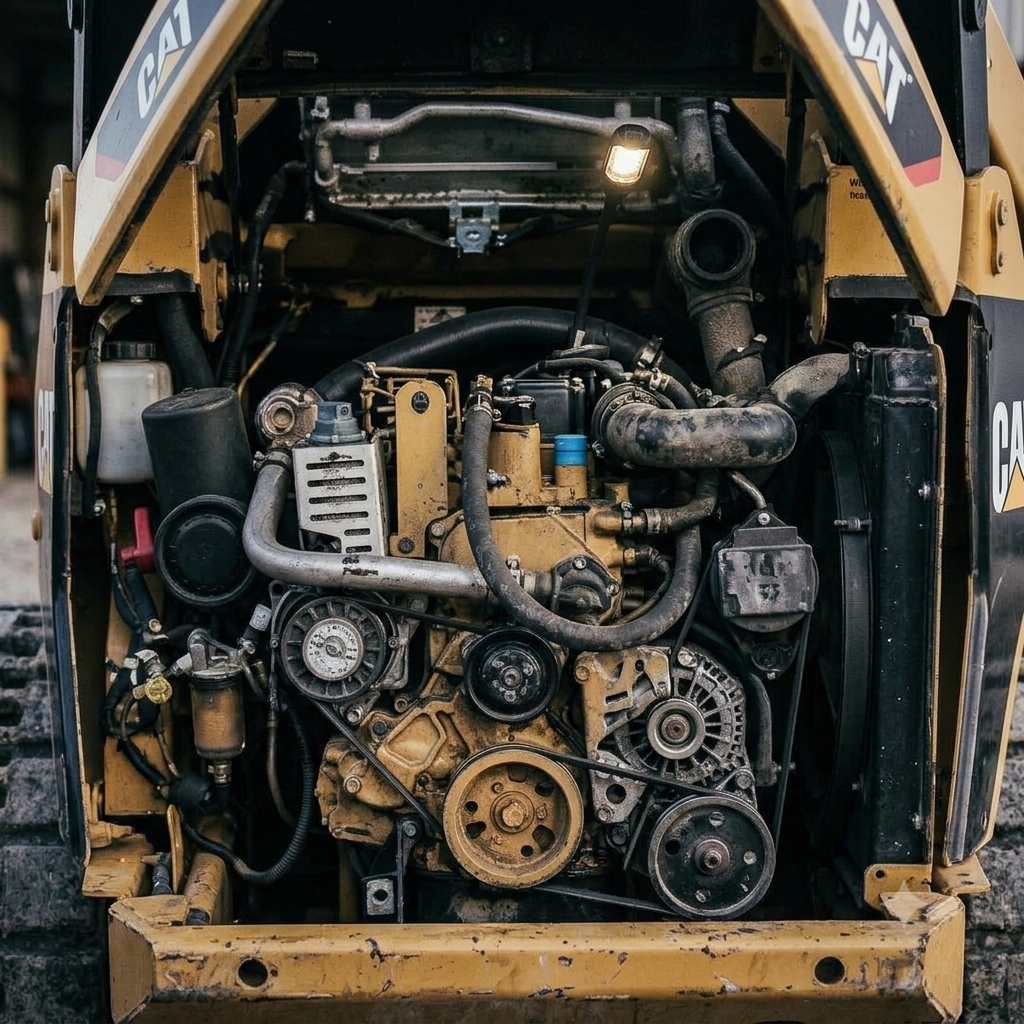
Hydraulic system issues Hydraulics do the heavy lifting — literally. Leaking cylinders, worn hoses, and failing pumps show up as slow arm movement, weak lift capacity, or fluid puddles under the machine. Left alone, a small hydraulic leak becomes a pump failure, which is a far more expensive repair.
Engine performance problems Hard starting, power loss under load, excessive smoke, or stalling usually trace back to fuel delivery, air filtration, or a failing sensor throwing an error code. Modern skid steers run on tight engine tolerances, so ignoring a check-engine light rarely ends well.
Electrical faults Skid steers are increasingly computer-controlled. A single bad sensor, connector, or ground can trigger safety lockouts that leave the machine dead in the field even when the mechanical components are fine. Diagnosing this correctly requires the right scan tools — not just a visual inspection.
Undercarriage and drive system wear Tracks, rollers, sprockets, and drive motors take constant abrasive wear, especially on gravel, concrete, or debris-heavy sites. Uneven track wear or a machine pulling to one side is usually your first sign.
Attachment and auxiliary hydraulics If your attachments (augers, brush cutters, forks, buckets) aren't getting full power or are responding sluggishly, the issue is often in the auxiliary hydraulic circuit rather than the attachment itself.
For a deeper breakdown of symptoms and error codes by system, see our companion article on common skid steer problems and when to call a mechanic.
Preventative Maintenance: What Actually Extends Skid Steer Life
Most of the repairs above are preventable with a consistent maintenance routine:
- Daily walk-around — check for fluid leaks, loose fasteners, and visible hose or track damage before startup
- Hydraulic fluid and filter changes on manufacturer schedule — contaminated fluid is the single biggest driver of premature pump and cylinder failure
- Grease points — lift arms, pivot points, and attachment mounts need regular greasing to prevent accelerated wear
- Track/tire condition checks — catching uneven wear early lets you adjust track tension or rotate before it becomes a drive system problem
- Air filter inspection — especially critical on dusty sites; a clogged filter starves the engine and accelerates wear
- Battery and electrical connection checks — corrosion and loose grounds cause a disproportionate number of "no-start" and lockout calls
A structured preventative maintenance schedule costs a fraction of an emergency repair — and keeps your machine out of our shop and on your job site.
DIY vs. Calling a Certified Shop
Daily checks, greasing, and fluid top-offs are reasonable for most operators to handle themselves. Where we'd stop you:
- Anything involving the hydraulic system under pressure — improper depressurization is a genuine safety hazard
- Electrical diagnostics — modern skid steer control systems require proper scan tools to read fault codes accurately; guessing wastes time and can mask the real problem
- Undercarriage repair — track and drive motor work requires specific tools and torque specs to avoid causing secondary damage
- Engine internals — anything beyond filters and fluids should go to a certified tech
Why Batavia Operators Trust RamzRep for Skid Steer Repair
We service the full skid steer system — hydraulics, engine diagnostics, electrical troubleshooting, undercarriage and drive systems, and attachment/auxiliary hydraulics — for Bobcat and other major brands. Our techs are ASE, DOT & IHCC certified, and we're backed by 100+ five-star reviews from contractors, landscapers, and property crews across the Fox Valley. See our full skid steer repair services or read what customers are saying.
FAQs: Skid Steer Repair
Watch for slow or weak arm movement, visible fluid leaks around cylinders or hoses, and unusual noise from the pump. Any of these point to a hydraulic system issue that gets worse — and more expensive — the longer it's ignored.
It depends entirely on the system involved — a hose replacement is far less than a pump or drive motor rebuild. Call (224) 595-0168 and describe the symptoms; we'll give you a realistic range before you bring it in.
Yes. We service Bobcat and other major skid steer brands, covering hydraulics, engine diagnostics, electrical systems, undercarriage, and attachment circuits.
Follow the manufacturer's hour-based service intervals for fluid and filter changes, with daily visual checks before each use. Machines running in heavy-abrasion environments (concrete, demolition, gravel) benefit from more frequent undercarriage and hydraulic inspections than the standard schedule suggests.
Keep Your Skid Steer Working, Not Waiting
From hydraulic leaks to undercarriage wear, RamzRep diagnoses and repairs skid steers right here in Batavia, IL. Certified techs, straight pricing, 100+ five-star reviews.