Gooseneck & Utility Trailer Repair Near Batavia, IL — A Practical Guide
Gooseneck couplers and utility trailer axles fail in completely different ways — and most shops only really know one of them. Here's a no-fluff breakdown of what each repair actually involves, what it costs, and what to watch for before something goes wrong on the road.
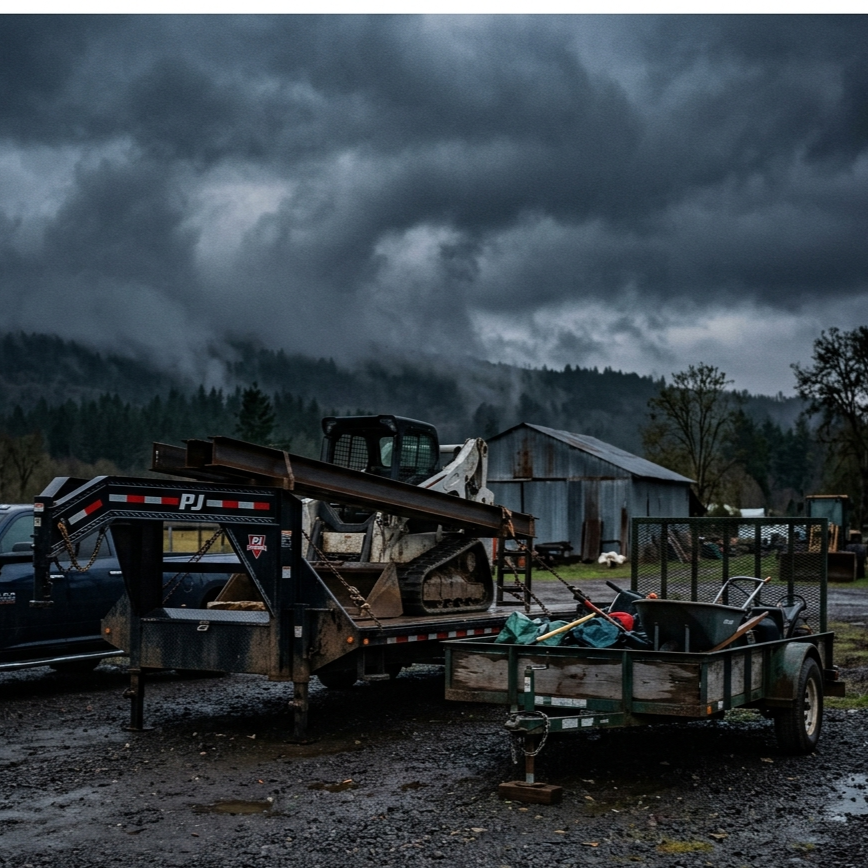
Gooseneck trailers and utility trailers are both workhorses — but they're built differently, they fail differently, and they require different expertise to repair. A shop that does great work on a utility trailer may have never touched a gooseneck coupler. And a shop that handles heavy goosenecks all day might not bother with the small stuff. At Ramirez Truck and Trailer Repair Services in Batavia, we work on both — and everything in between. This guide breaks down what's actually involved in each type of repair so you know what to expect when you call.
Just want to book a repair? See all trailer repair services at our Batavia location and get a free estimate.
What Makes Gooseneck Trailer Repair Different?
Gooseneck trailers are built to haul heavy loads — equipment, livestock, flatbed cargo. That extra capacity comes with extra complexity, and that complexity shows up when something needs to be repaired.
The most distinctive issue is coupler wear. The gooseneck coupler takes constant stress from the kingpin connection, and over time the coupler ball socket wears oval, creating dangerous play in the hitch. This isn't something you'll notice right away — it creeps up gradually — but worn couplers need to be inspected and replaced before they fail on the road. Signs to watch for include a slight rocking motion when the trailer is hitched, difficulty latching, or a metallic grinding sensation when turning.
Another failure mode that's unique to goosenecks is neck weld cracking. The gooseneck tube welds to the trailer frame under enormous stress, especially when loading heavy equipment over the neck. Stress cracks in the weld zone are a structural failure risk — not a cosmetic issue — and they need professional repair, not a patch. This is one of the main reasons gooseneck trailer repair requires a genuine specialist. A general mechanic with a welder may not know what to look for, or how to properly prep and weld a load-bearing trailer joint.
Fifth-wheel-style gooseneck setups also have a pin box that can wear, crack, or loosen at the mounting points over time. Pin box slop causes trailer sway and uneven tire wear — two problems that get blamed on other things before someone checks the pin box. It's one of the most overlooked gooseneck repair items we see.
Finally, gooseneck trailers run longer wiring harnesses than bumper-pull trailers, with more junction points and more exposure to mechanical stress. Brake circuits, running lights, and auxiliary power connections all need proper routing and weatherproofing to hold up under working conditions. An electrical fault on a gooseneck can be harder to trace than on a shorter trailer for exactly this reason.
The bottom line: gooseneck trailer repair is not the place to take a chance on a shop that's guessing. Structural issues at the coupler and neck weld require experience — not just a willingness to try.
Most Common Utility Trailer Repairs Near Batavia
Utility trailers are the workhorses of the Fox Valley — hauling landscaping debris, firewood, ATVs, mulch, and whatever else needs moving. They take a beating, sit outside year-round, and often don't get looked at until something breaks. Here are the repairs we see most on utility trailers in the Batavia area.
Floor rot is the most common issue on open utility trailers, and it's almost always worse than it looks. Wood decking absorbs water from the underside — accelerated by road splash, pooled rain, and the debris loads sitting on top. By the time the top surface looks soft, the underside boards have often been rotting for a year or two. Replacing boards early runs $120–$200. Waiting until the deck is fully compromised can push that to $400 or more.
Axle bearing wear is the one that worries us most from a safety standpoint. A grinding noise while towing, or a wheel that seems to wobble slightly, usually means the bearings are starting to go. Ignored long enough, a failed bearing takes out the spindle and hub with it — turning a $90 bearing replacement into a $600 axle repair. This is the most common "I should have brought it in sooner" conversation we have with customers.
Ramp hinges seize or crack from corrosion, especially on trailers used for ATV and UTV loading where the ramps take repeated heavy impact. A seized hinge isn't just annoying — it puts stress on the ramp frame every time it's forced open, eventually bending or cracking the ramp itself. Hinge replacement is straightforward, usually $60–$180 depending on the trailer.
Hitch ball socket wear creates trailer sway and increases stress on the coupler latch mechanism. Most people notice this as a slight side-to-side looseness while towing, or as a coupler that feels like it's riding up. It's an easy fix when caught early.
Tie-down D-ring mounts pull loose from the frame over time, especially on trailers that see heavy or uneven loading. The bolts back out, the mount plates crack at the weld, or the frame rail itself develops fatigue cracks at the mount point. All fixable — just don't load and haul on a loose D-ring mount.
Small Trailer Repair — What Counts and What It Costs
People often assume small trailers are cheap to fix. Sometimes that's true. Sometimes it's not — and it depends entirely on what's wrong, not how big the trailer is.
Open landscaping trailers take some of the hardest abuse of any trailer type. They're loaded unevenly, exposed to chemical fertilizers, dragged across curbs, and rarely maintained. Floor boards rot, rear gate hinges seize, and wiring gets destroyed by weed trimmer line and road debris. Most landscaping trailer repairs fall in the $60–$300 range depending on what needs replacing.
ATV and UTV trailers are often overloaded relative to their rated capacity. Ramp failure, bent frames from bottoming out, and wheel bearing wear from off-road use are the most common issues. A bent frame on a small ATV trailer can be as involved to straighten as on a larger utility trailer — small size doesn't mean simple repair.
Single-axle enclosed cargo trailers used for business — tools, gear, product transport — develop door alignment issues, latch failures, and floor rot at the rear ramp opening. The enclosed design traps moisture and accelerates interior floor damage. Door and floor repairs typically run $100–$350 depending on the scope of the work.
We repair all small trailer types at our Batavia shop. No minimum size, no trailer turned away because it isn't a big commercial rig.
How to Choose a Trailer Repair Specialist in the Fox Valley
There are plenty of shops in Kane and DuPage County that will take your trailer. Fewer of them have genuine experience across gooseneck, utility, and specialty trailer repairs. Here's what to look for before you hand over the keys.
Start with the direct question: "Do you work on this type of trailer?" A shop that hedges on that — or redirects to a generic "we fix everything" answer — is one to be cautious with for anything structural. Gooseneck neck weld repair and coupler replacement require someone who has done it before, not someone figuring it out on yours.
Ask for a written estimate before work starts. Any reputable trailer repair shop will provide this without hesitation. If a shop won't commit to a quote or says they'll "see what they find," that's a sign of how the rest of the job will go. You should know exactly what you're paying and why before a wrench is turned.
Pay attention to turnaround time. Most trailer repairs don't need to take weeks. A shop that quotes you three weeks for a bearing swap isn't the right fit if your trailer is how you work. Look for same-week appointments and same-day or next-day turnaround on standard repairs — that's what a shop prioritizing trailer work can deliver.
Finally, check reviews specifically for trailer repair. You want to see feedback from contractors, landscapers, and farmers who brought in actual trailers — not just general auto repair customers. In a community like Batavia or Geneva, local reputation is hard to fake and fast to build.
Learn more about what makes a good trailer repair specialist — and what sets Ramirez Truck and Trailer Repair Services apart from generic shops in the Fox Valley.
Ramirez Truck and Trailer Repair Services— Your Gooseneck & Utility Trailer Repair Shop in Batavia, IL
We've built our reputation in the Fox Valley on knowing trailers — not just the common stuff, but the full range of what trailer owners in Kane and DuPage counties actually pull. Gooseneck couplers, neck welds, utility trailer axles, ramp hinges, small trailer frames, enclosed cargo trailer doors — we work on all of it, from a single repair to a full seasonal maintenance catch-up.
We service dump trailers, utility trailers, gooseneck trailers, cargo trailers, enclosed trailers, landscaping trailers, and ATV and UTV trailers. Based in Batavia, we serve customers from Geneva, St. Charles, North Aurora, Aurora, Elgin, Sugar Grove, Oswego, Warrenville, West Chicago, Wheaton, Naperville, and throughout the Fox Valley. Same-week appointments available. Free written estimates before any work starts.
Frequently Asked Questions
Gooseneck trailers have unique failure points that bumper-pull trailers don't — specifically the coupler and kingpin connection, neck weld stress cracks, and pin box wear. These are structural issues that require a trailer repair specialist with direct experience on gooseneck platforms. A general mechanic without that background may miss the early warning signs or misdiagnose the root cause.
The most frequent utility trailer repairs we see near Batavia are floor board rot, axle bearing wear, ramp hinge failure, hitch ball socket wear, and tie-down D-ring mounts pulling loose. Most are inexpensive when caught early — the cost rises significantly when they're left until they fail completely.
It depends on what needs to be repaired. Electrical work and coupler adjustments are on the lower end. Neck weld repair and pin box replacement are more involved jobs. We give you a free written estimate before starting any work — call us to describe what you're seeing and we'll give you a ballpark before you even bring the trailer in.
Signs of coupler wear include visible play or rocking between the ball and socket when hitched, a coupler that's hard to latch or won't latch securely, or a metallic grinding sensation when turning. Any of these warrants an inspection before your next haul. Coupler failure while towing is a serious road hazard.
Gooseneck Coupler or Utility Trailer Axle — We've Got You Covered
Whether it's a gooseneck coupler or a utility trailer axle, Ramirez Truck and Trailer Repair Services handles it all right here in Batavia. Serving Geneva, St. Charles, Aurora, Elgin, Naperville & the full Fox Valley — same-week appointments, free estimates, no surprises. Also dealing with trailer light issues? Read our trailer light repair guide